
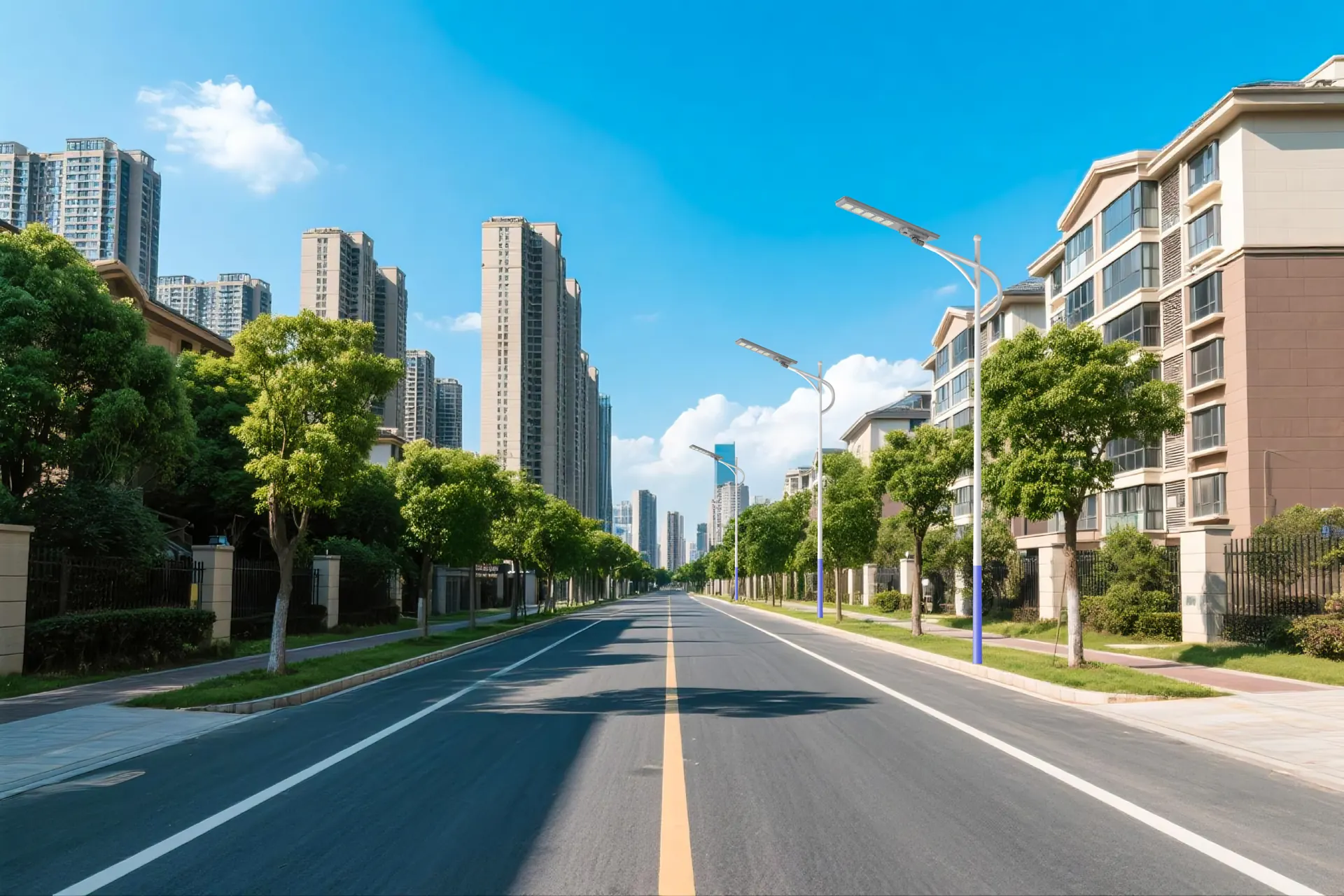
All in One Solar Street Light
An all in one solar street light puts the panel, battery, controller and LED head in one body. You bolt it to a pole and it runs without cables. We make five all in one series for roads, estates, farms and parks.
All in One Solar Street Lights We Supply
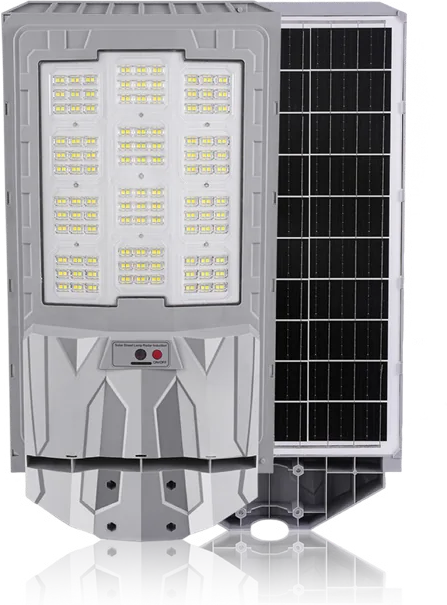
SOMA Solar Street Light
All in one solar street light with radar sensor and remote control.
- 100W to 400W class
- 200 lm/W chip
- IP66
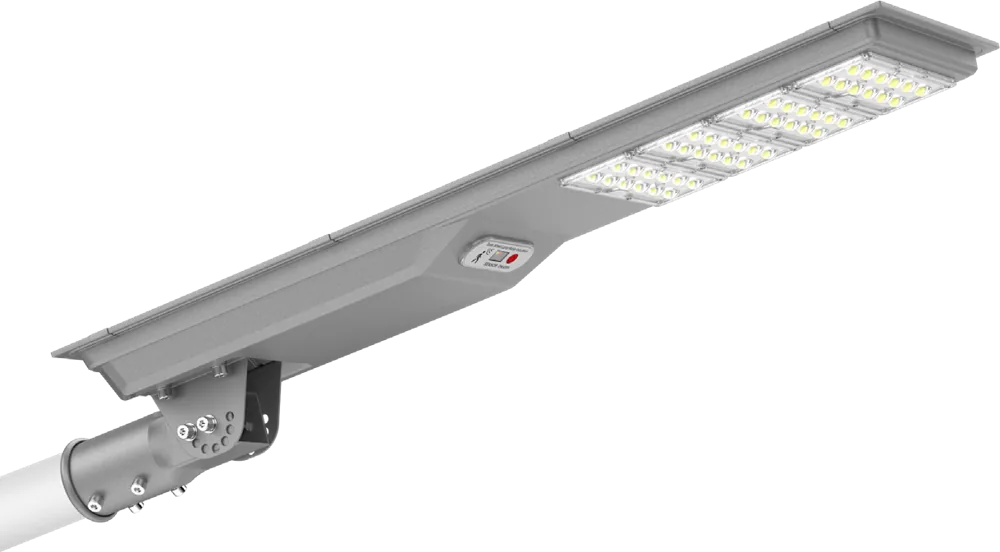
SOSA Solar Street Light
Galvanized steel all in one solar street light with a radar sensor.
- 100W to 300W class
- 200 lm/W chip
- IP66
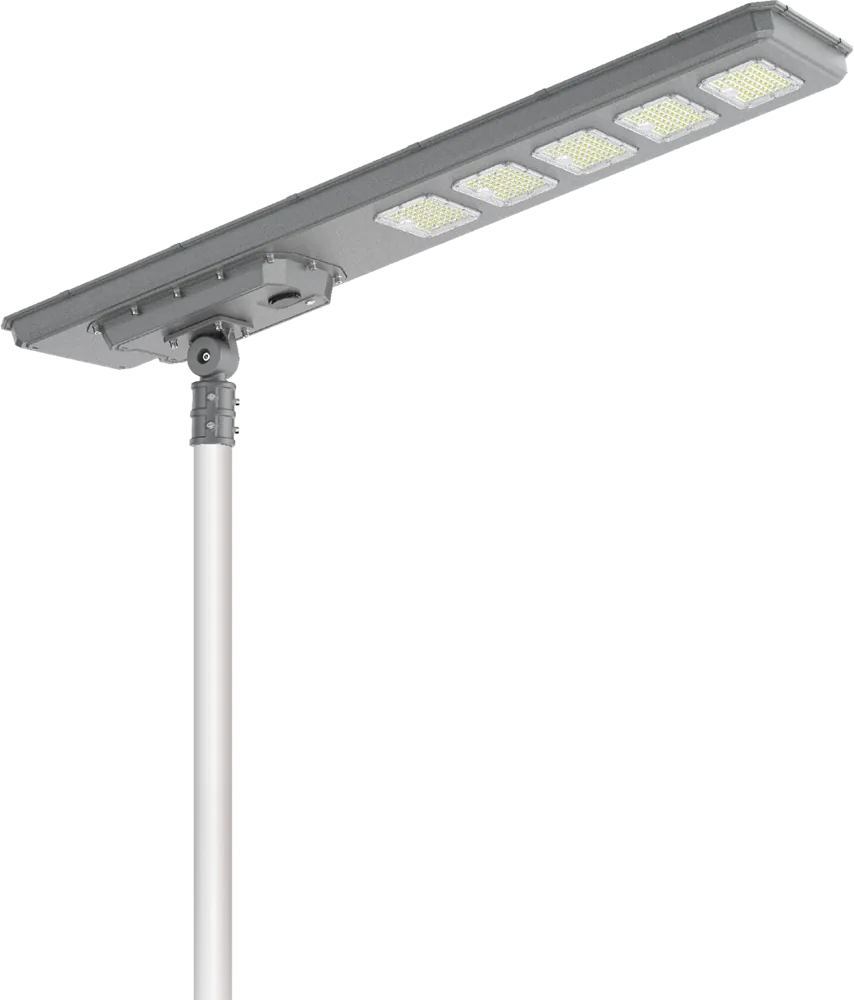
SOSE Solar Street Light
Larger all in one solar street light for Ø80 mm poles.
- 100W to 400W class
- 200 lm/W chip
- IP66
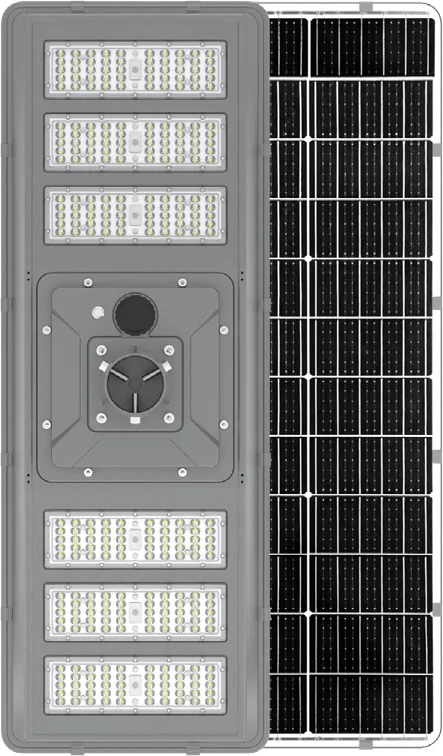
SOHE Solar Street Light
Compact steel all in one solar street light, 100W and 200W class.
- 100W to 200W class
- 200 lm/W chip
- IP66
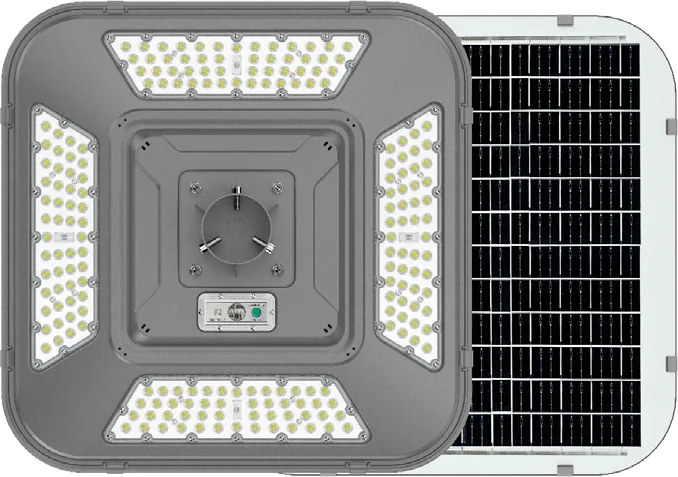
SOLA Solar Street Light
360° solar post top light for parks and plazas.
- 100W to 200W class
- 200 lm/W chip
- IP66
Our five all in one series
| Series | Wattage class | Housing | Sensor | Pole fit | Notes |
|---|---|---|---|---|---|
| SOMA | 100W to 400W | ABS, PC lens | Radar | Ø40 to 50 mm | Remote control, replaceable battery |
| SOSA | 100W to 300W | Galvanized steel, PC lens | Radar | Ø50 to 60 mm | Sturdy body for exposed sites |
| SOSE | 100W to 400W | Galvanized steel, PC lens | None | Ø80 mm | Larger unit for main village roads |
| SOHE | 100W and 200W | Galvanized steel, PC lens | None | Ø50 to 60 mm | Compact, dusk to dawn |
| SOLA | 100W and 200W | Galvanized steel, PC lens | Radar | Ø80 mm post top | 360° light for parks and plazas |
All five use LiFePO4 battery cells (3.2 V), SMD 5054 LED chips rated 200 lm/W at chip level, 3000K to 7500K light and an IP66 rating. The panels run at 6 V, except the two largest SOSE classes, which use 18 V.
What the wattage class means
This is the point that confuses most buyers. In the solar street light market, "100W" or "300W" is a class name. It does not tell you how much power the LEDs draw from the battery, and the real figure is lower.
Two lights sold as "300W" can have very different batteries and panels. One may run bright all night in the dry season and fade after a cloudy day. The other may keep going for several nights. The only fair way to compare offers is to ask for three numbers for each model:
- Real LED power in watts
- Battery capacity in Wh (voltage × Ah)
- Panel power in watts
Here are ours. Battery Wh is the amp-hours times 3.2 V.
| Series | Classes | Real LED power | LiFePO4 battery | Solar panel |
|---|---|---|---|---|
| SOMA | 100W to 400W | 4W, 8W, 12W, 25W | 16 Wh to 96 Wh | 10W to 40W |
| SOSA | 100W to 300W | 16W, 20W, 24W | 64 Wh to 96 Wh | 25W to 35W |
| SOSE | 100W to 400W | 30W, 40W, 50W, 60W | 192 Wh to 384 Wh | 60W to 120W |
| SOHE | 100W, 200W | 30W, 37W | 192 Wh, 240 Wh | 65W, 90W |
| SOLA | 100W, 200W | 15W, 22W | 96 Wh, 144 Wh | 35W, 50W |
How battery size decides the nights
A simple example shows how the numbers work together. The figures below are an illustration, not the data of one of our models.
Take a light with 20W real LED power. It runs at full power for 4 hours after dusk, then at 30% for the remaining 8 hours:
- Full power: 20W × 4 h = 80 Wh
- Dimmed: 6W × 8 h = 48 Wh
- One night: about 128 Wh
To cover two cloudy nights after the first, the battery needs around 3 × 128 = 384 Wh of usable energy. LiFePO4 cells handle deep cycling well, but a design that keeps some reserve lasts longer. The panel then has to refill that energy in the hours of sun your site gets in its worst month.
Send us your location and the lighting profile you want, and we match the model and the battery and panel sizes to the site.
Radar sensors and lighting profiles
Three of our all in one series (SOMA, SOSA and SOLA) carry a radar motion sensor. Radar senses movement through the housing and works in dust and heat, where some infrared sensors struggle.
A common profile runs the light at a low level most of the night and raises it to full output when a person or vehicle approaches. On a quiet village road this can stretch the battery much further than a light that burns at full power until dawn. SOMA also comes with a remote control that sets brightness, timer and auto modes from the ground, so the installer can match the profile to the road without climbing the pole.
SOSE and SOHE have no sensor. They suit roads with steady traffic, where a fixed dusk to dawn profile makes more sense.
Pole height and spacing
Match the model to the pole:
- SOMA fits Ø40 to 50 mm poles, which usually means lower poles on estate lanes, paths and farm tracks
- SOSA and SOHE fit Ø50 to 60 mm poles for village roads and residential streets
- SOSE fits Ø80 mm poles for wider village main roads and parking areas
- SOLA mounts post top on Ø80 mm poles and lights in all directions, for parks, plazas and walkways
Most all in one solar street lights go up at 4 to 8 m. Spacing of three to four times the mounting height is a common starting point on minor roads. For a road project, send the road width, pole height and spacing, and we check the layout.
Housing: steel or ABS
Galvanized steel (SOSA, SOSE, SOHE, SOLA) resists knocks, stone throwing and rough handling on rural sites. ABS (SOMA) is lighter and costs less, which helps on large orders shipped by sea, since freight is often charged by volume and weight. All five housings are IP66.
All in one or split?
An all in one light is fast to install and cheap to ship, since there is one box per pole and no cable between panel and lamp. The panel faces the same way as the lamp head, though. On roads running east to west, or on shaded sites, the panel may not get enough sun.
For those sites a split model works better. SOHO and SONA mount the panel separately, so it can face the sun while the lamp faces the road. Compare both types on our solar street light page.
Ordering
Send the model or the application, quantity, site location and destination port through the form below. Tell us how many nights of backup you need. We reply with prices and with the real LED power, battery Wh and panel watts for each model. If you sell under your own brand, see OEM and ODM. For grid-powered roads, see our LED street lights.
Built in Our Factory
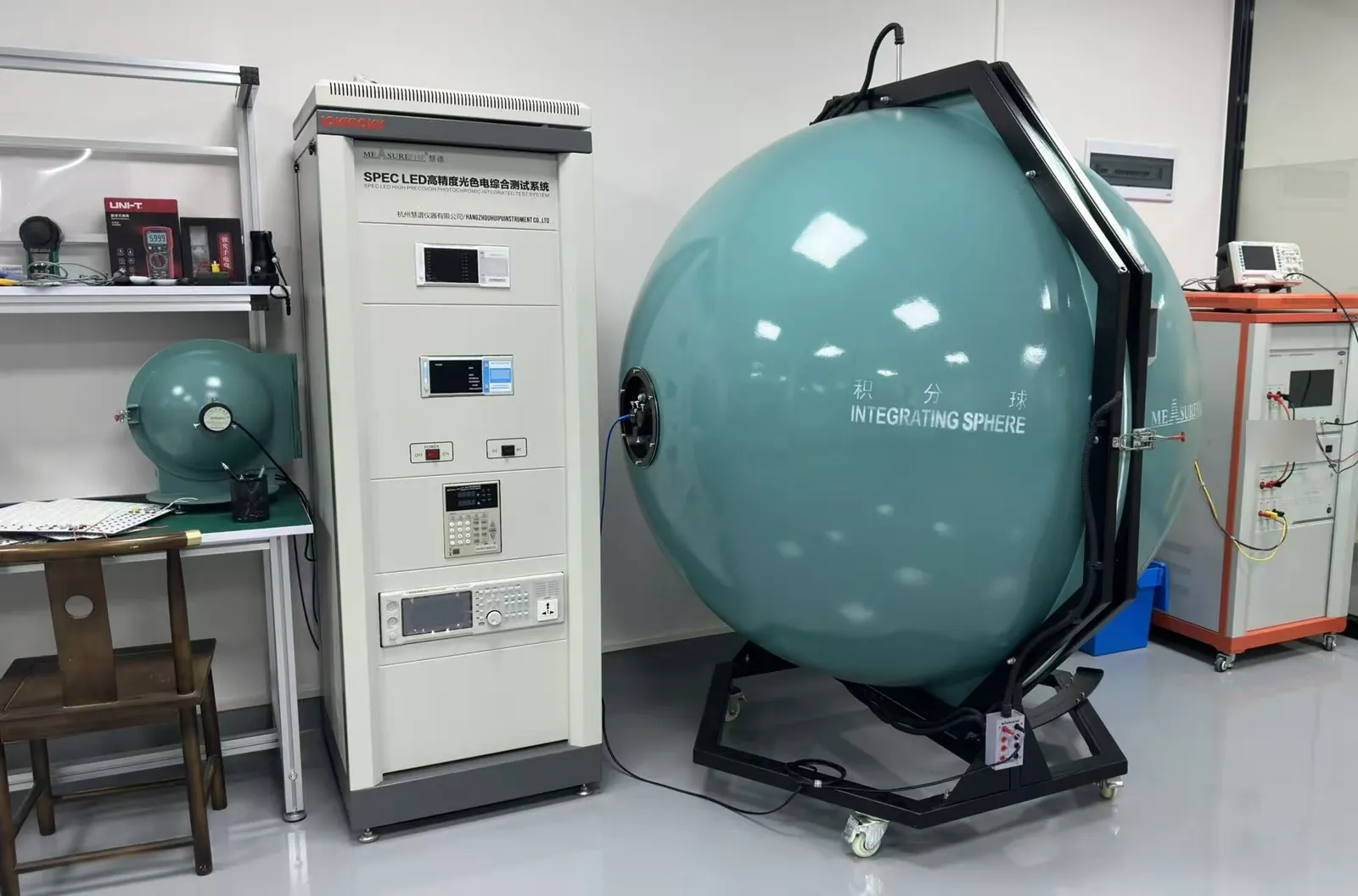
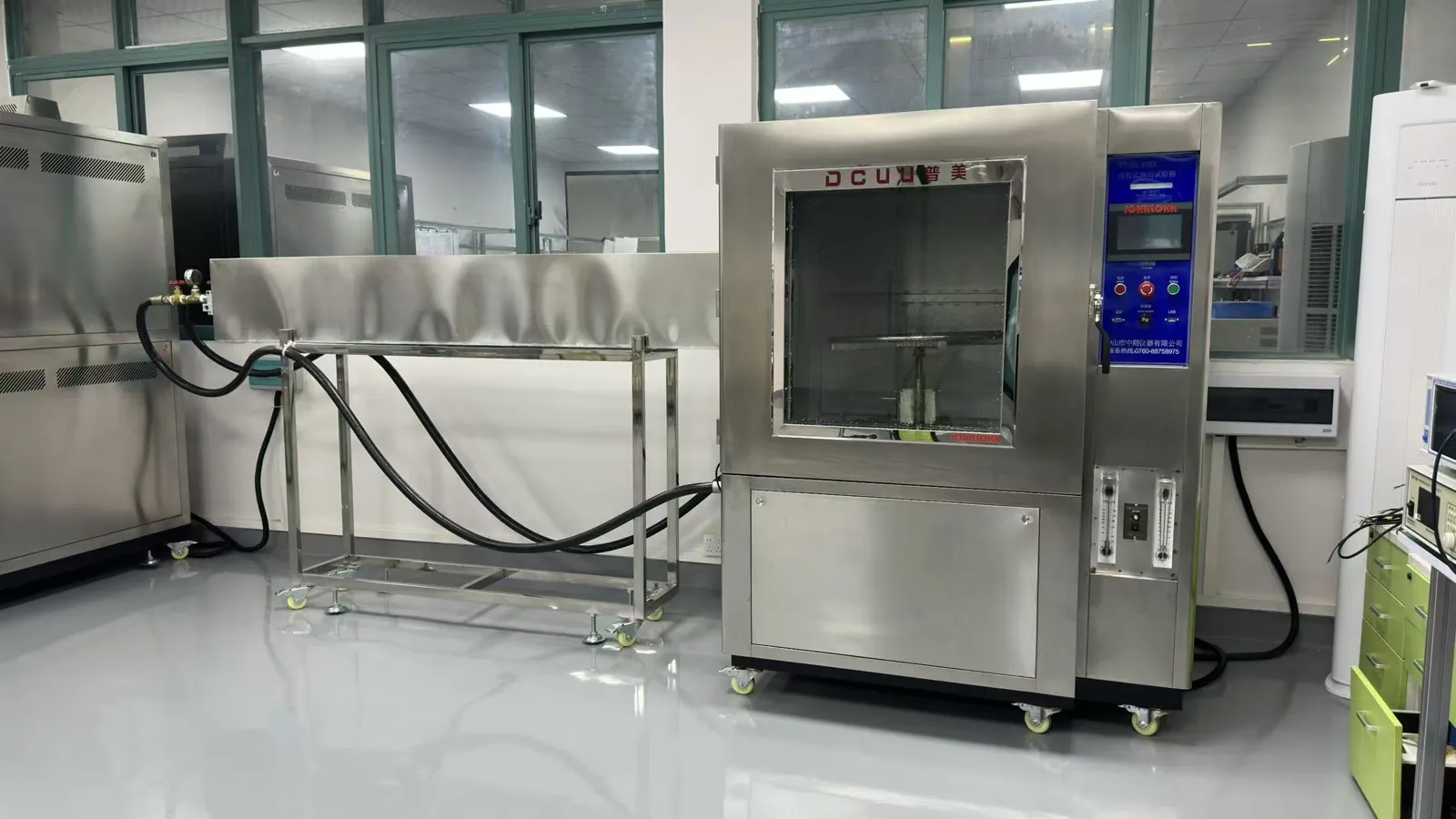
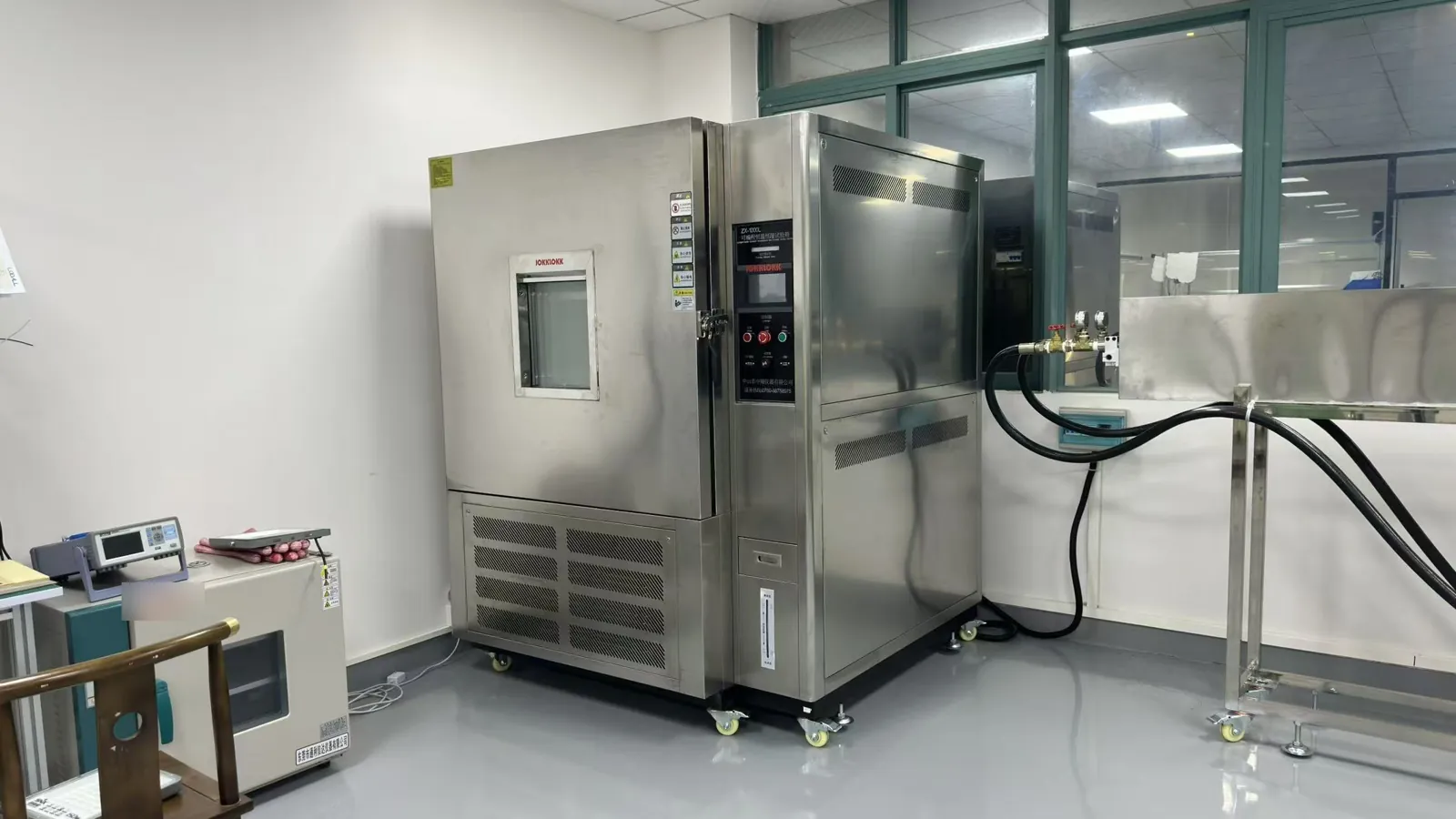
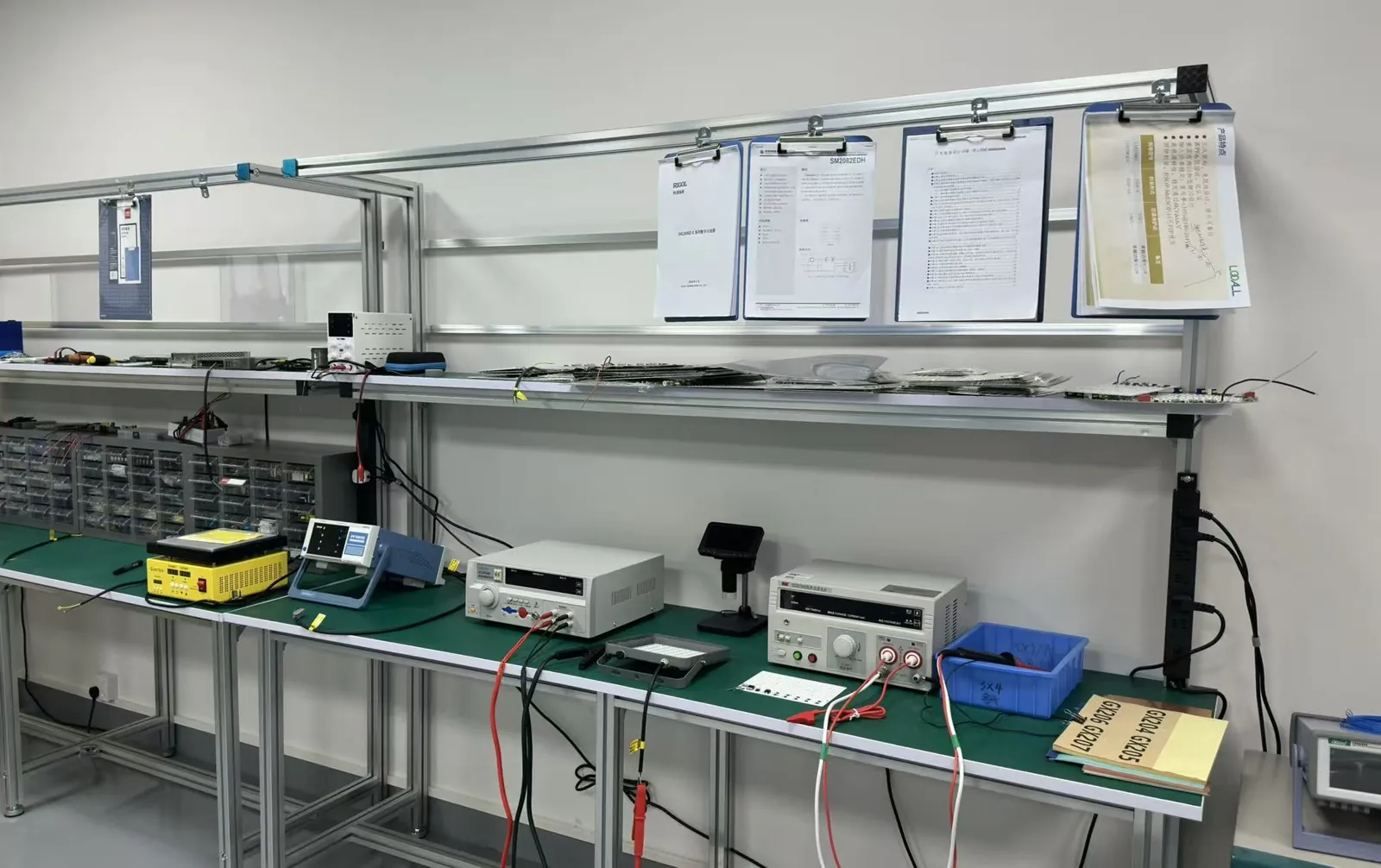
Our partner factory in Guzhen has made outdoor LED lights since 2014. Housings, molds and final testing all happen under one roof, and the factory lab tests light output, sealing, temperature and electrical safety.
Die-casting in house
The factory casts its own aluminum housings, so it controls wall thickness and fin design for heat dissipation.
Mold making
An in-house mold shop builds new housings for OEM and ODM projects without an outside tooling partner.
Voltage and surge options
Economy series with 4 kV to 6 kV protection on the LED board, project series with wide input drivers and up to 10 kV. Any series can be built to 10 kV.
Aging test
Each finished light runs powered on the aging rack before packing to catch early failures.
Pre-shipment inspection
Your own inspector or a third-party agency can check the goods before loading.
Export packing
Carton sizes and gross weights go into the quotation, and the packing list goes to your forwarder.
FAQ
What is an all in one solar street light?
A street light with the solar panel, battery, controller and LED head built into one body. It mounts on a pole with no cables and charges by day to run at night.
What does "300W" mean on an all in one solar street light?
It is a market class name. The LEDs draw less power than that from the battery. Ask for the real LED power, battery Wh and panel watts. For example, our SOMA 100W class runs 4W of LEDs from a 16 Wh battery and a 10W panel.
How many nights does an all in one solar street light run without sun?
That depends on battery capacity, LED power and the lighting profile. Tell us how many backup nights you need and we size the model for it.
Which battery do your all in one solar street lights use?
All five series use LiFePO4 cells, which handle heat and deep daily cycling better than older lithium types.
Do I need a motion sensor?
On quiet roads, a radar sensor saves battery by dimming the light until someone approaches. SOMA, SOSA and SOLA have radar sensors. On busy roads a fixed profile without sensor works well.
What pole height suits an all in one solar street light?
Most go up at 4 to 8 m. Check the pole fit: SOMA takes Ø40 to 50 mm, SOSA and SOHE take Ø50 to 60 mm, SOSE and SOLA take Ø80 mm.
When should I choose a split solar street light instead?
When the road runs east to west or the site is partly shaded. A split model lets the panel face the sun while the lamp faces the road.
Can you print our logo on the lights?
Yes. We print your logo and pack in your color box with your labels and manual.
Get a Quote for All in One Solar Street Lights
Send us your requirement. We reply with prices, specifications and packing data.
- Chat with sales