
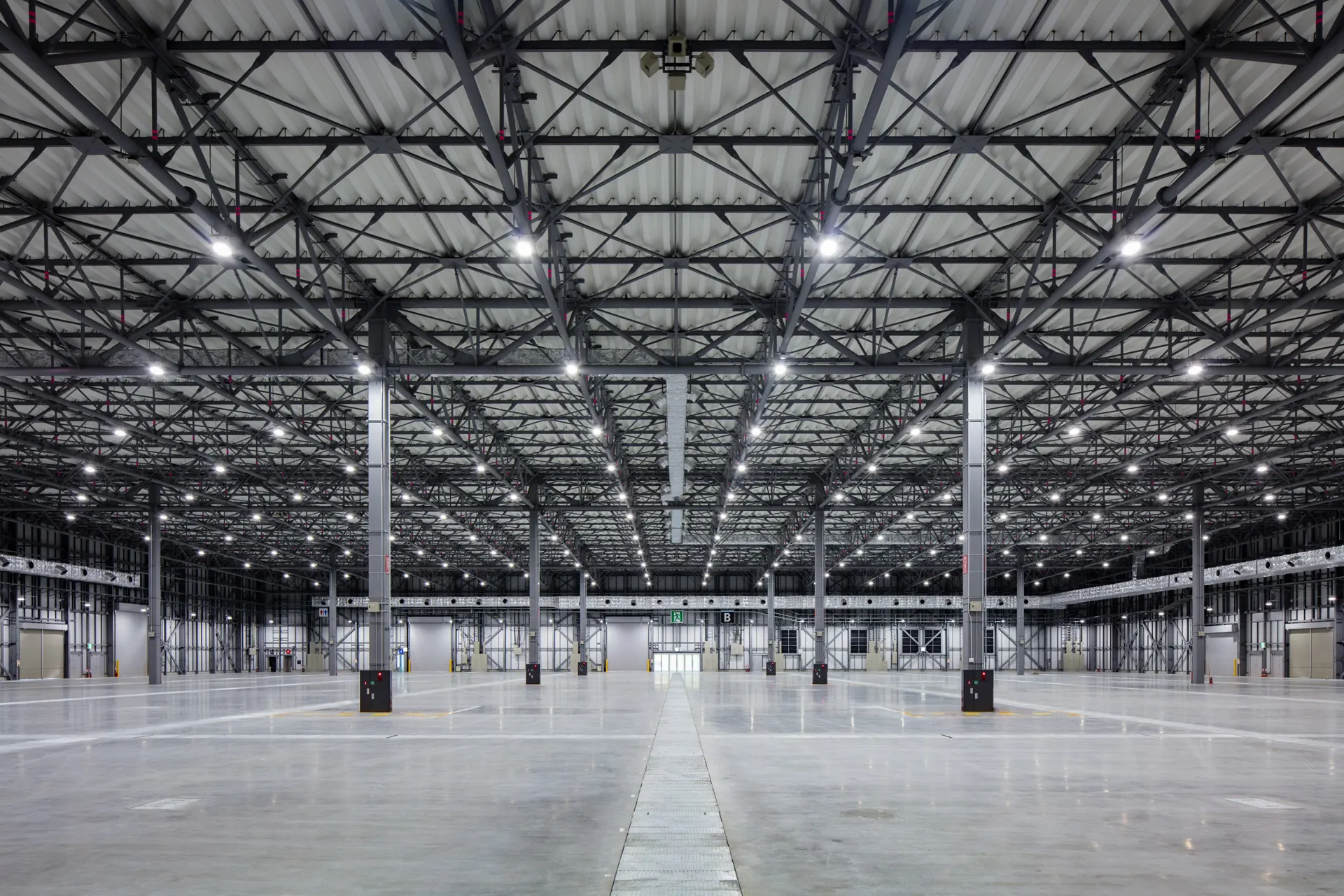
UFO LED High Bay Light Manufacturer
UFO high bays for warehouses, factories and workshops, up to 150 lm/W, with 60° beams for high ceilings and a motion sensor option for quiet aisles.
4 series · 100W to 300W
Our UFO High Bay Lights
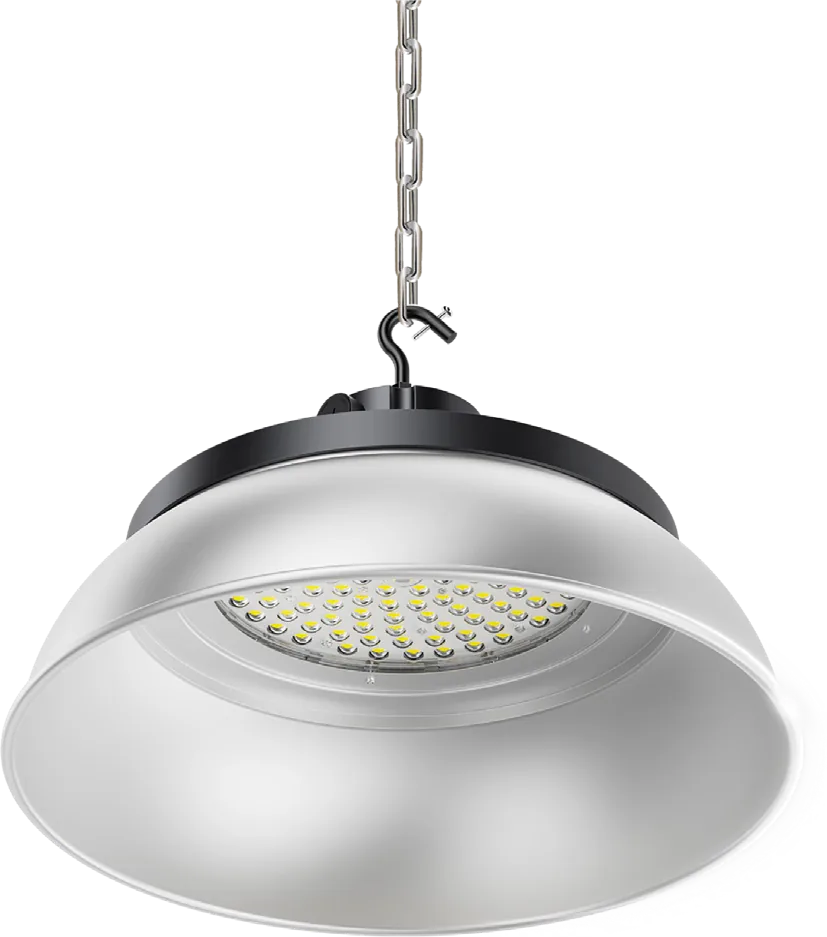
MILU UFO High Bay Light
200 lm/W UFO high bay from 100W to 200W with a wide input voltage.
- 100W to 200W
- 200 lm/W
- IP66
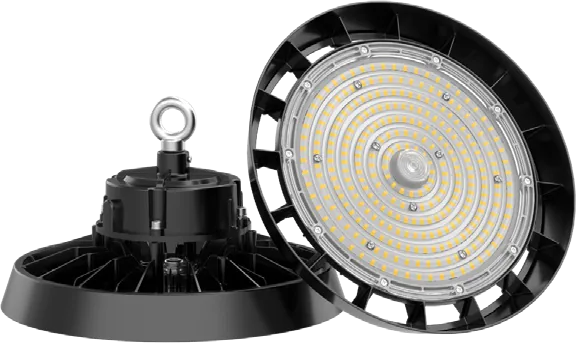
HILA UFO High Bay Light
UFO high bay up to 300W with a 60° beam option for high ceilings.
- 100W to 300W
- 150 lm/W
- IP66
- Surge 6 kV
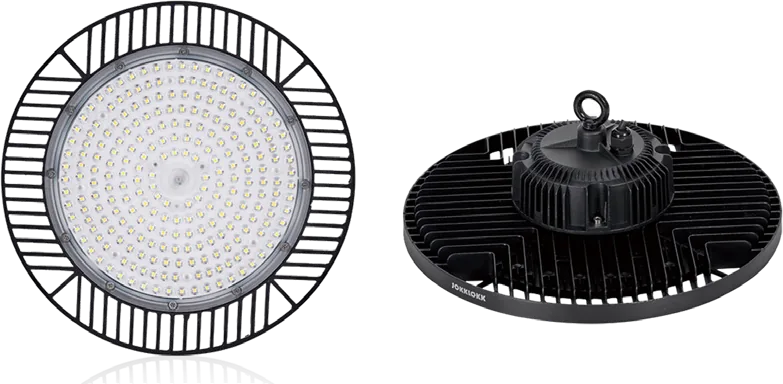
MILA UFO High Bay Light
UFO high bay with an optional radar sensor for low-traffic aisles.
- 100W to 200W
- 150 lm/W
- IP66
- Surge 6 kV
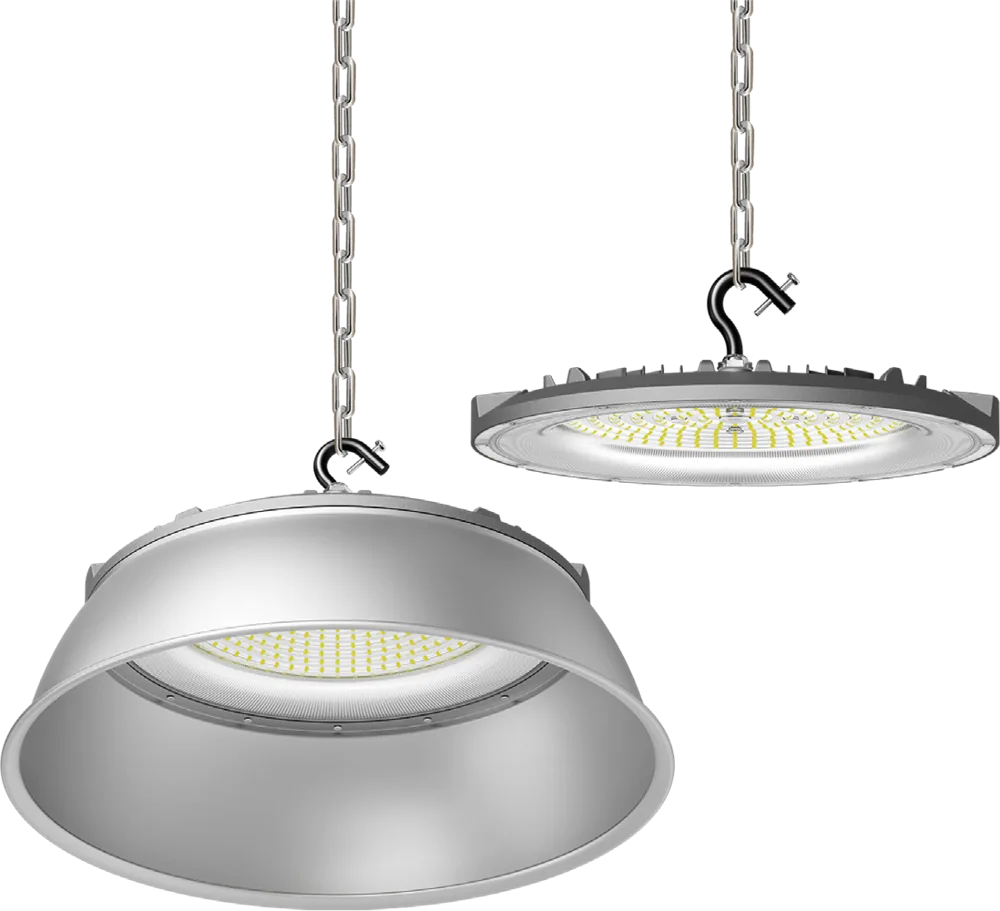
MINO UFO High Bay Light
Economy UFO high bay, 100W to 200W, for budget-led projects.
- 100W to 200W
- 120 lm/W
- IP66
- Surge 6 kV
Compare UFO High Bay Lights
Rated values from our catalog. Higher efficacy and other voltage or surge levels are available on request.
UFO high bay lights from an LED high bay light manufacturer
We make UFO high bay lights for warehouses, factories, logistics centers and sports halls. As an LED high bay light manufacturer, we keep the range short: four series from 100W to 300W, all rated IP66, with efficacy from 120 lm/W to 150 lm/W on our quoted models. Distributors can cover most ceiling heights with two or three SKUs, and contractors get a sealed fitting that copes with dust and humidity in a working building.
The round UFO shape hangs from a hook or a ceiling bracket and pushes heat out through fins on top of the die-cast aluminum body. It has become the standard replacement for the metal halide high bay.
Choosing by ceiling height and use
Mounting height sets both the wattage and the beam angle. The table gives typical starting points. A layout for your floor plan decides the final spacing, and we suggest one if you send the plan and the ceiling height.
| Building | Typical mounting height | Typical wattage | Beam | Series that fit |
|---|---|---|---|---|
| Workshops, markets, garages | 5 to 7 m | 100W | 90° | MINO, MILU |
| Factories and assembly halls | 6 to 9 m | 100W to 150W | 90° | MILU, HILA, MINO |
| Warehouses with racking | 8 to 12 m | 150W to 200W | 60° in aisles, 90° in open areas | HILA, MILA in open areas |
| High bay logistics centers | 10 to 14 m | 200W to 300W | 60° | HILA |
| Cold storage and low traffic zones | 6 to 10 m | 100W to 200W | 90° | MILA with radar sensor |
| Sports halls and gyms | 7 to 10 m | 150W to 200W | 90° | MILU, HILA |
The four series at a glance
HILA is the project fitting: 100W to 300W at 150 lm/W, a 60° or 90° beam, an AC 100 to 277 V driver with 6 kV surge protection and a 5 year warranty, for tall logistics buildings. MILA runs at the same 150 lm/W and voltage from 100W to 200W with a 90° beam, and adds the optional radar sensor. MINO is the economy fitting at 120 lm/W on AC 180 to 265 V for workshops and markets where the unit price matters more than the energy bill. MILU, a 90° fitting from 100W to 200W on AC 85 to 265 V, completes the catalog range. Most distributors stock HILA and MINO, and quote MILA when a project calls for the sensor.
Replacing metal halide high bays
The table below is a rule of thumb for one to one replacement on the same hooks. Older fittings with dirty reflectors deliver less than their rating.
| Existing fitting | LED at 120 lm/W | LED at 150 lm/W |
|---|---|---|
| 250W metal halide | 120W to 150W | 100W to 120W |
| 400W metal halide | 200W | 150W to 200W |
| 1000W metal halide | 400W or two fittings | 300W to 400W |
| 400W high pressure sodium | 200W | 150W to 200W |
At 150 lm/W, HILA and MILA use about a fifth less power than a 120 lm/W fitting for the same light. In a warehouse that runs two shifts, that difference shows up on every monthly energy bill.
Beam angle, glare and spacing
A 90° beam spreads light wide and suits ceilings up to about 8 m, open floors and gyms. Above that height a wide beam wastes light on the walls and the tops of racks. A 60° beam concentrates the light on the floor and into the aisles. HILA offers both angles. MILA, MILU and MINO come with 90°.
Spacing usually ends up between 1 and 1.5 times the mounting height for even light on the floor. In racked warehouses, place the fittings over the aisles, not over the racks.
Glare matters where drivers of forklifts look up, and in sports halls where players track a ball. A higher mounting height and a narrower beam both reduce it. Tell us if your project has a glare limit and we discuss options.
Technical points
IP66 indoors
An IP66 rating may look excessive for a building. It earns its place in food plants and loading bays that get washed down, in humid warehouses and in dusty workshops. Dust inside a fitting cuts light output and traps heat.
Input voltage
MILU accepts AC 85 to 265 V. HILA and MILA accept AC 100 to 277 V and cover 277 V supplies. MINO runs on AC 180 to 265 V for stable 220 V to 240 V grids. HILA, MILA and MINO carry 6 kV surge protection as standard, and any series can be upgraded to 10 kV at extra cost. Factories with large motors often see voltage dips at start-up, so a wide input range protects the driver there.
Surge protection
High bays sit inside a building, so they face smaller surges than street lights. Large motors, welding sets and long feeder cables in industrial buildings still create spikes. Tell us about the electrical environment and we state the protection level of each item in the quotation.
Efficacy
HILA and MILA are rated 150 lm/W and MINO 120 lm/W. These are rated system figures for the complete fitting. MILU carries a catalog rating of 200 lm/W; ask for the measured value of your model before you compare it with other offers. MINO costs less per unit for workshops and budget projects that run fewer hours.
Motion sensors
MILA takes an optional radar motion sensor. The fitting dims when an aisle is empty and returns to full output when a person or forklift enters. It suits cold stores, parking garages and warehouses where many zones see traffic only a few times an hour.
Color temperature
All four series come in 3000K, 4000K and 6000K. Most industrial and warehouse projects choose 4000K or 6000K.
Planning a high bay project
A useful request for a quotation includes:
- The floor plan with dimensions
- The mounting height, measured to the bottom of the fitting
- Rack heights and aisle widths, for warehouses
- The existing fittings and their wattage, for a retrofit
- The supply voltage
- The lux level in your specification, if there is one
With these we suggest the series, wattage, beam angle and spacing, and estimate how many fittings the building needs.
Installation and upkeep
UFO high bays hang from a hook, a chain or a ceiling bracket. Fit a safety cable in buildings with vibration, such as factories with cranes or presses. Keep the cooling fins on top clear of dust in workshops and flour or feed plants, because a clogged heat sink runs hotter and shortens LED life. The IP66 body allows a wash down where your site rules permit it.
Estimating the energy saving
The example below uses generic figures to show the method. Your own tariff, hours and fitting count decide the real result.
A warehouse runs 50 metal halide high bays of 400W. With ballast losses of about 10%, each draws around 440W. Replacing them with 200W LED high bays at 150 lm/W saves about 240W per fitting, or 12 kW across the building. At 16 hours a day for 300 days a year, that comes to about 57,600 kWh a year. Multiply by your electricity price per kWh to see the yearly saving.
Metal halide lamps also need replacing every few years, and they take minutes to restrike after a power cut. LED high bays start at once, which matters in buildings where the supply drops out during storms.
Typical lighting levels
EN 12464-1 gives typical average illuminance targets for indoor work places. The figures below are typical values. Your project specification and local codes take priority.
| Area | Typical average illuminance |
|---|---|
| Storage areas and stockyards under cover | 100 to 150 lux |
| Warehouses with picking and racking | 150 to 200 lux |
| Loading bays and dispatch | 150 to 200 lux |
| General factory and workshop work | 300 lux |
| Fine assembly and inspection | 500 lux and above |
| Sports halls for training | 200 to 300 lux |
Ordering UFO high bays
We print your logo on the housing and pack the lights in your color box with your label and manual. If your market needs a different efficacy, voltage range or sensor, ask in your inquiry and we confirm the options. The OEM and ODM page lists what we can change.
Our quotation lists carton sizes, quantity per carton and gross weights, and we prepare the packing list for your forwarder. You can combine high bays with flood lights for the yard outside and LED street lights for the site roads in one order. Test a sample in your own building first, and see the checks on our quality control page.
Built in Our Factory
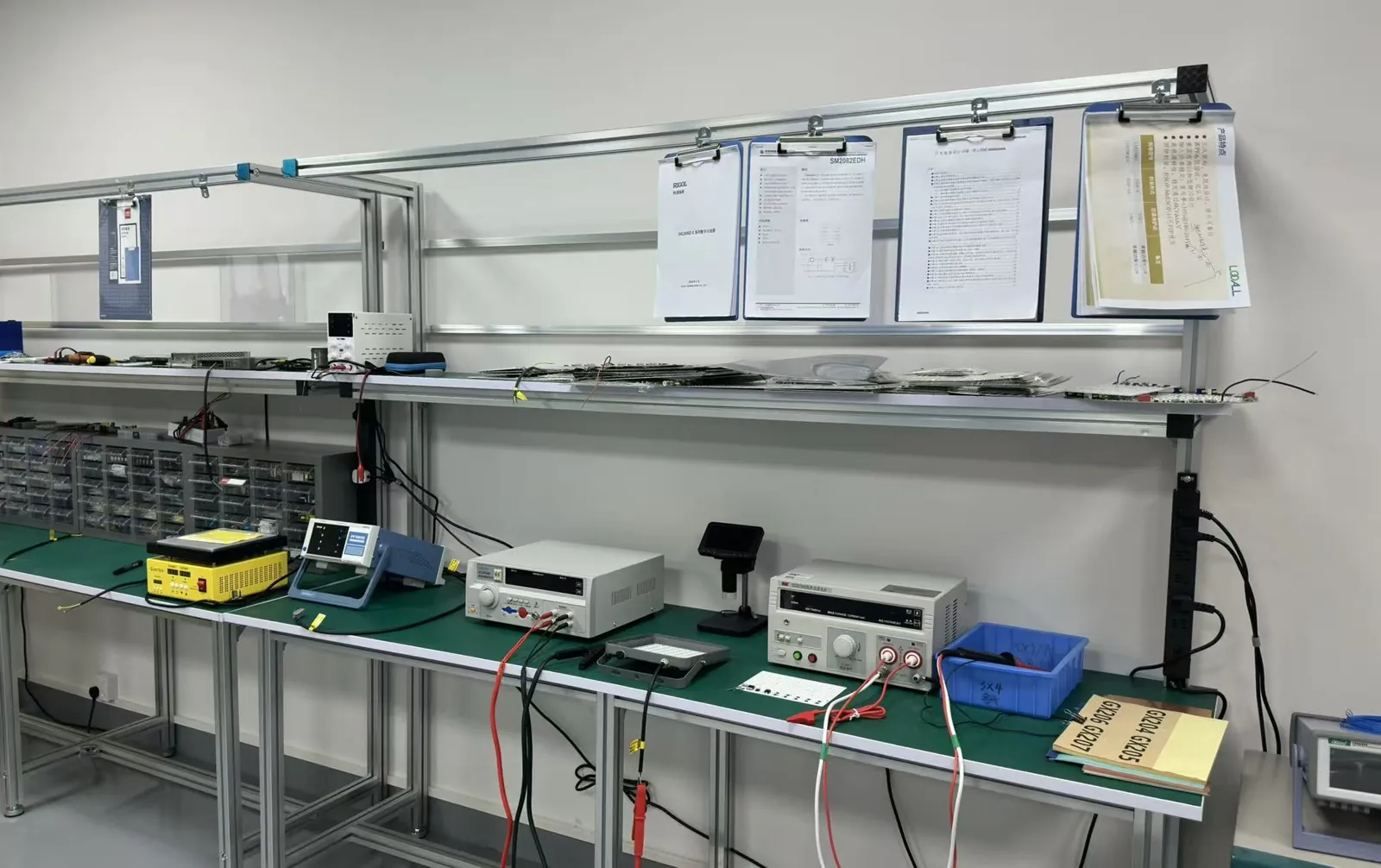
Our partner factory in Guzhen has made outdoor LED lights since 2014. Housings, molds and final testing all happen under one roof, and the factory lab tests light output, sealing, temperature and electrical safety.
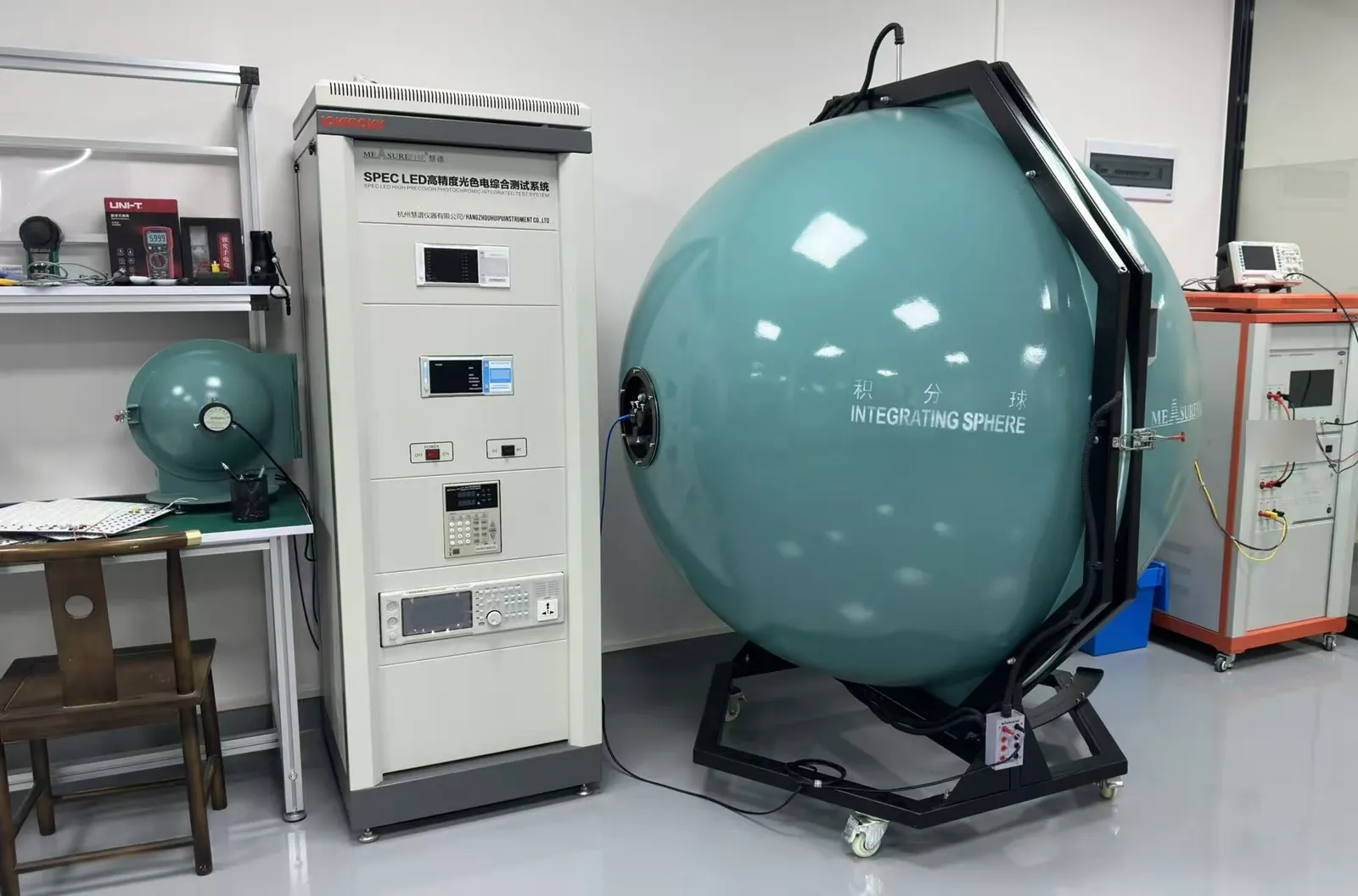
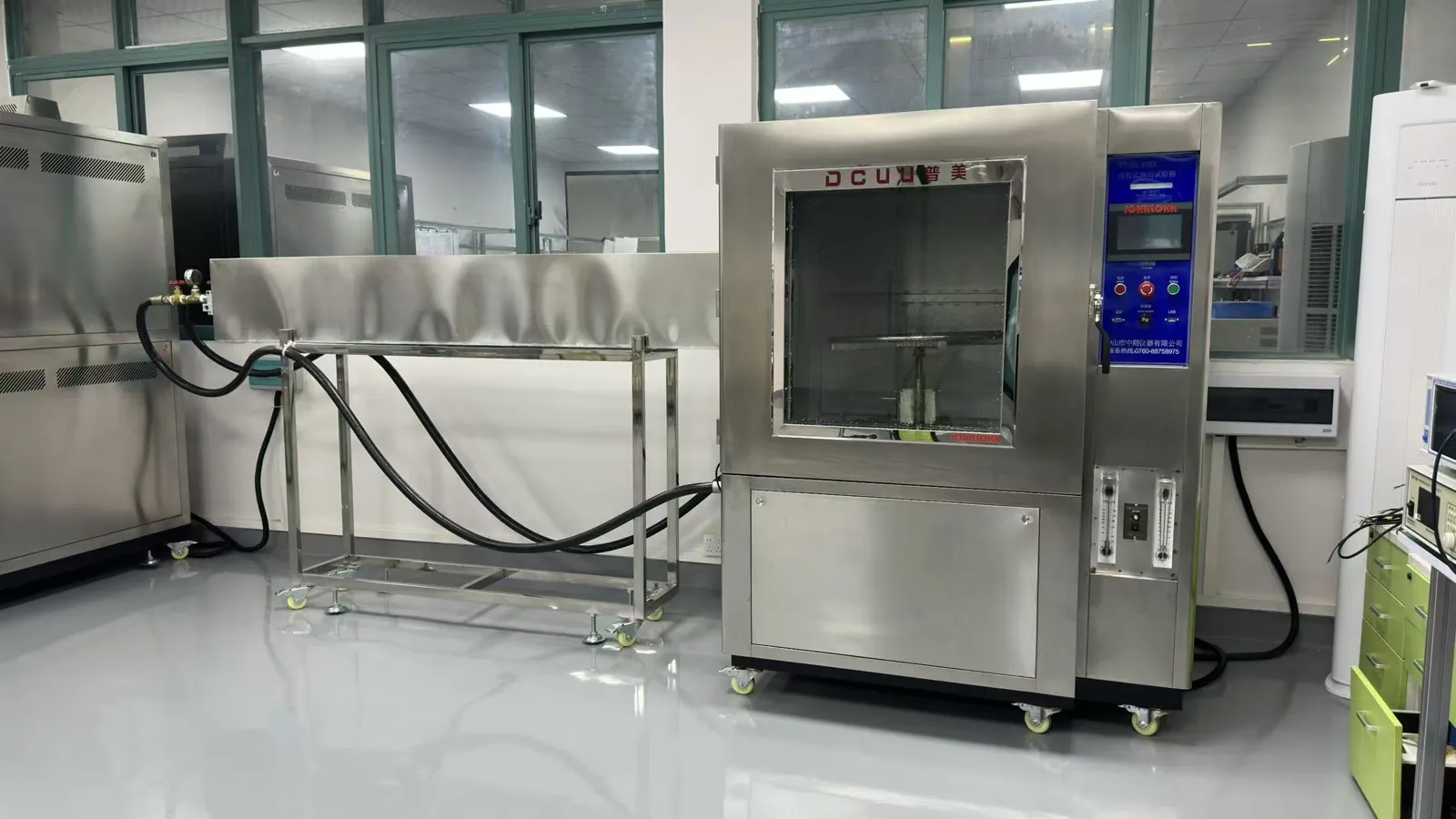
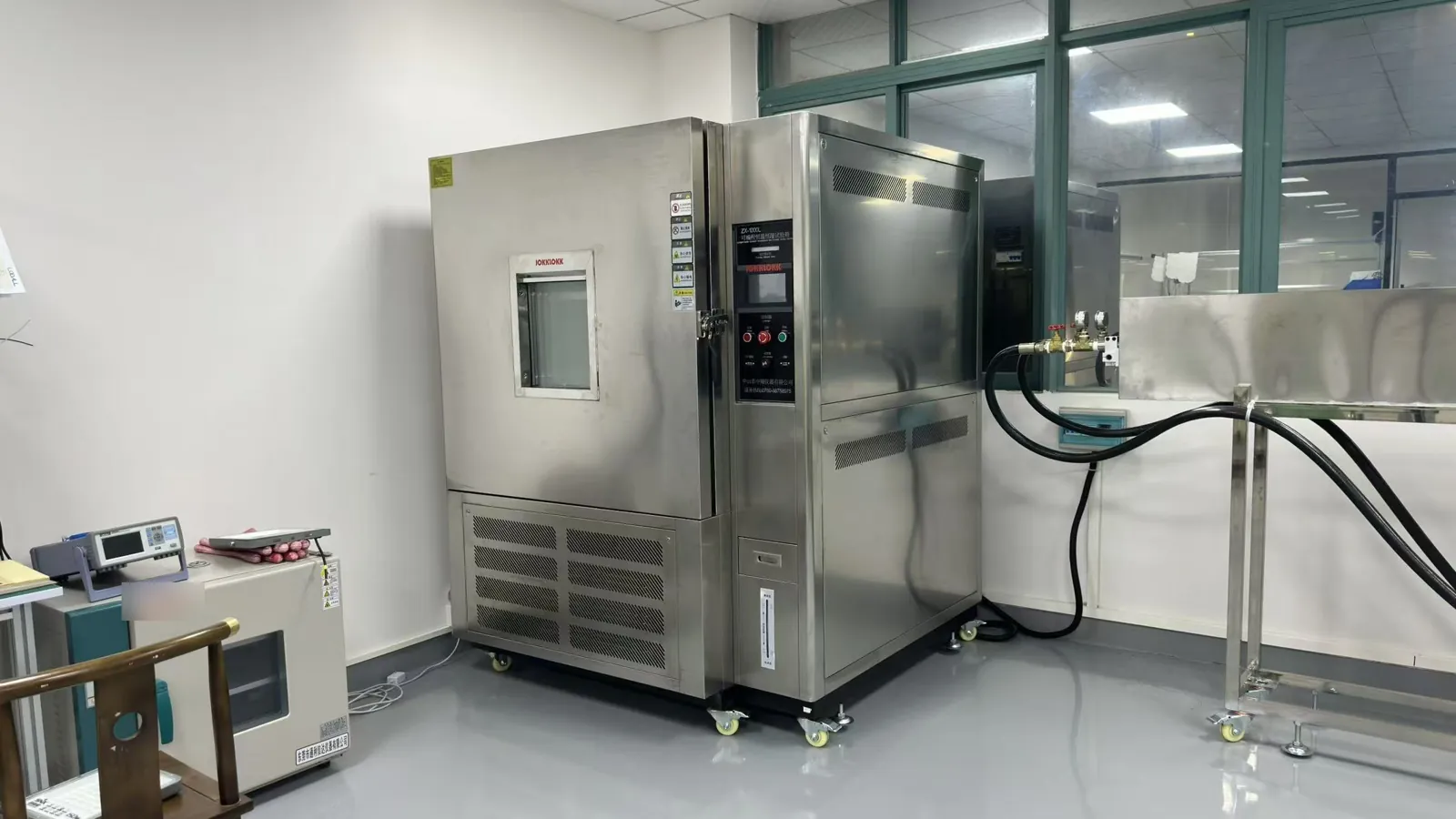
Die-casting in house
The factory casts its own aluminum housings, so it controls wall thickness and fin design for heat dissipation.
Mold making
An in-house mold shop builds new housings for OEM and ODM projects without an outside tooling partner.
Voltage and surge options
Economy series with 4 kV to 6 kV protection on the LED board, project series with wide input drivers and up to 10 kV. Any series can be built to 10 kV.
Aging test
Each finished light runs powered on the aging rack before packing to catch early failures.
Pre-shipment inspection
Your own inspector or a third-party agency can check the goods before loading.
Export packing
Carton sizes and gross weights go into the quotation, and the packing list goes to your forwarder.
UFO High Bay Lights FAQ
What affects the price of a UFO high bay light?
Wattage and efficacy set most of the price. A 150 lm/W fitting uses more and better LEDs than a 120 lm/W fitting of the same wattage. A sensor, a dimming driver, custom branding and the order quantity also change it. We quote each option separately.
How many high bays do I need for my warehouse?
That depends on the floor area, the ceiling height, the rack layout and the lux level you need. Send the floor plan with heights and we propose a wattage, beam angle and spacing.
Should I choose a 60° or a 90° beam?
Use 90° for ceilings up to about 8 m and for open floors. Use 60° for higher ceilings and for racked aisles, where it puts more light on the floor and less on the rack tops.
Which series is best for a cold store?
MILA with the radar sensor option. Cold stores have long periods with nobody inside, and the sensor dims the light until someone enters.
Can the high bays be dimmed?
MILA dims automatically with its sensor option. For 0 to 10 V or other dimming drivers on other series, ask in your inquiry and we confirm the options and price.
What warranty do you give?
HILA and MILA carry a 5 year warranty, and MINO 3 years. The term for each item is written into the sales contract.
What is the minimum order quantity and lead time?
You can start with a trial order, and we confirm the minimum quantity in the quotation. Production can take as little as 25 days, sometimes less, after you confirm the models and packaging.
Can we test a sample first?
Yes. We send samples so you can hang one in your building and measure the light before the bulk order. We charge for the sample and deduct it from the bulk order.
Do you supply mounting accessories?
The UFO housing mounts from a hook or bracket. Tell us how your building is fitted, for example chain, hook or ceiling bracket, and we confirm the accessories in the quotation.
Get a Quote for UFO High Bay Lights
Send us your requirement. We reply with prices, specifications and packing data.
- Chat with sales